Intermountain Health Consumer Personas
Project Overview
Overview
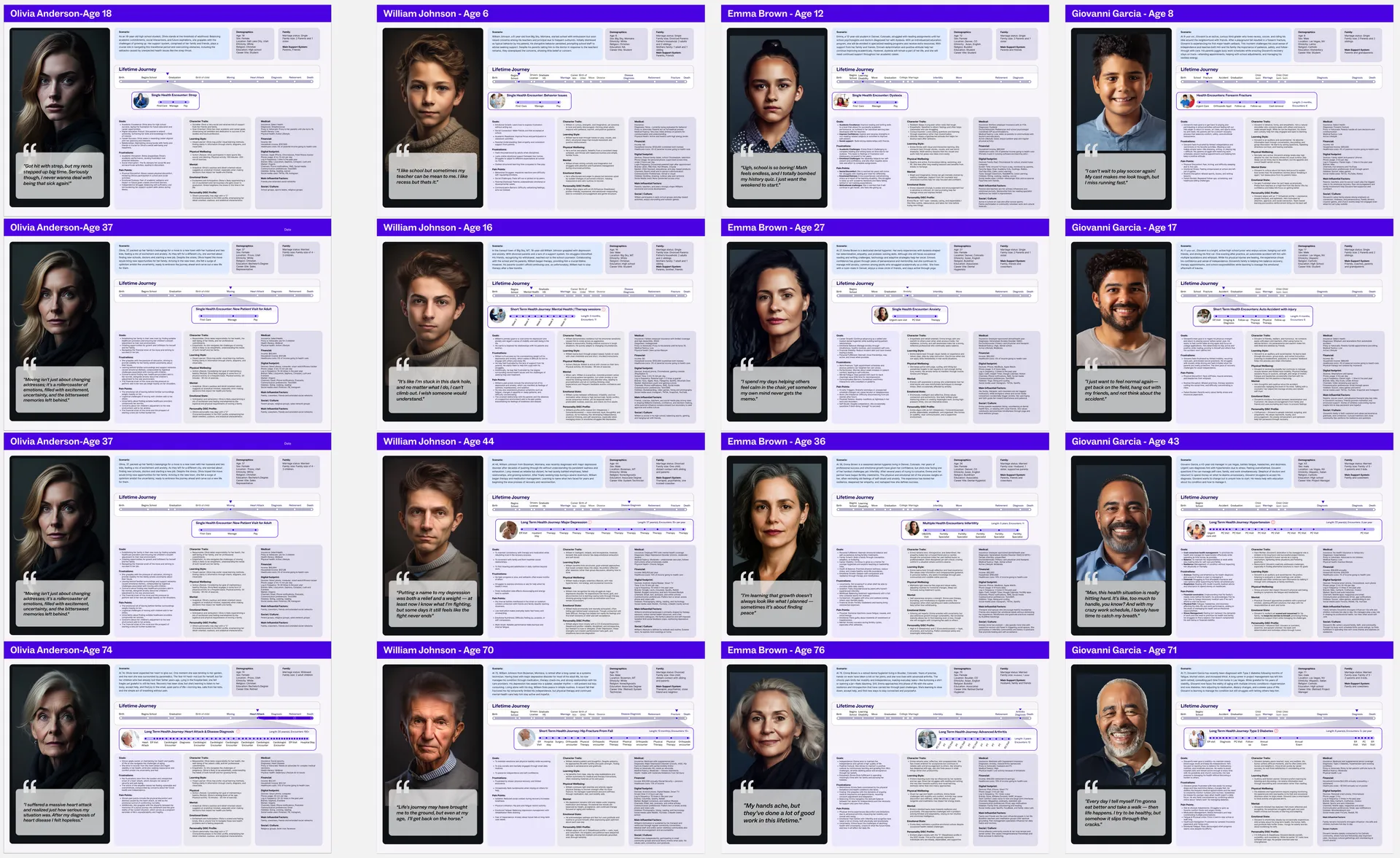
Intermountain Health's consumer personas are designed as life-long, person-first archetypes that represent common needs, motivations, barriers, and moments that matter from childhood through older adulthood. The set uses age-progressions to show how health, family, work, finances, and digital proficiency evolve over time, and how care needs shift from acute, episodic encounters to longer-term, multi-disciplinary journeys.
Challenge
Despite broad agreement on the value of personas, organizations commonly face systemic hurdles that these life-journey personas are intended to resolve:
- Siloed insights = misaligned decisions
Unify teams with shared research + language. - Problems and product too complex making them hard to use
Persona's simplify priority so they guide backlog and roadmaps. - Low adoption = personas unused
Embed into rituals (planning, processes, reviews and releases). - Outdated data = low trust
Refresh regularly; tie to outcomes; provide tools + education.
Role
As the primary designer on this initiative, the role centered on guiding research, cross-team alignment, and system-wide adoption so personas function as a living, evolving tool for the organization.
- Lead Research: Conducts interviews and task studies, then distills insights into clear personas, need statements, and journey maps.
- Facilitate Alignment: Runs collaborative sessions that build shared understanding across product, clinical, and engineering teams while demonstrating the business value of personas.
- Drive Operationalization: Embeds personas into reviews, templates, and decision tools to ensure consistent, organization-wide adoption.
Solution
The solution for Intermountain Health focuses on these essentials:
- Unified Persona System: Keep an accessible library of personas and journey snapshots for the larger team.
- Integrated Into Workflows: Use personas in discovery, reviews, planning, journey mapping, and product decisions.
- Continuous Learning: Provide quick trainings, templates, and regular data-informed updates.
- Real-World Coverage: Capture diverse scenarios, edge cases, and friction points.
- Life-Journey Insight: Ensure solutions work across short tasks and long, multi-stage care journeys.
- Evidence-Based Decisions: Ground choices in research-driven profiles.
- Shared Language: Create alignment and consistency across teams.
The Process

Empathize

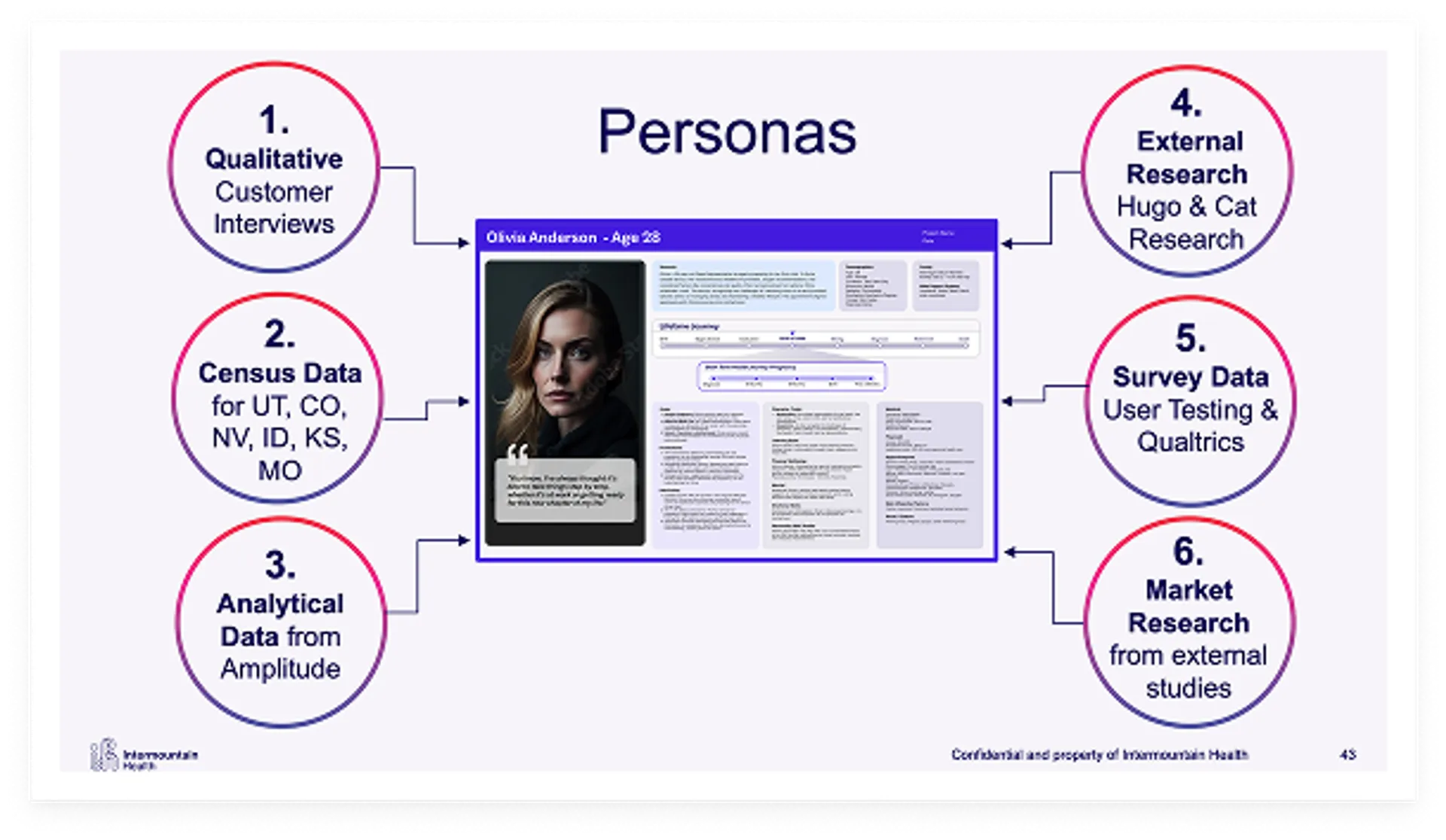
Intermountain Health's personas are built on a robust, multi-source research foundation that ensures each life-stage scenario is both clinically accurate and emotionally authentic. This methodology blends clinical expertise, demographic reality, lived experience, and digital-behavior evidence, creating personas that support confident decision-making across product, clinical, and operational teams.
The personas draw from six core inputs:
- Medical & clinical resources that define real care pathways, terminology, timelines, and health-event progressions.
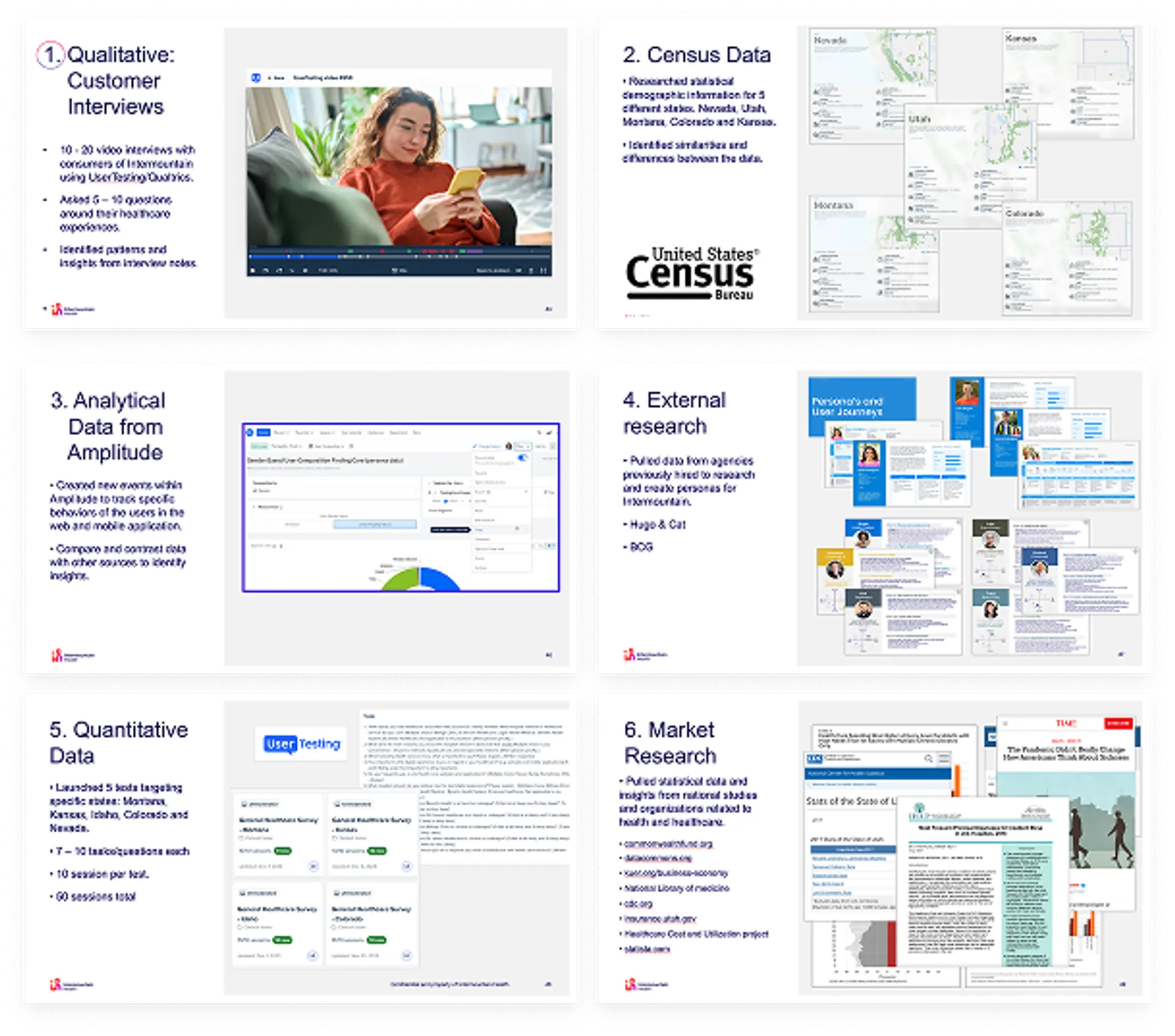
- U.S. Census and regional demographic data to anchor personas in actual population patterns across age, income, ethnicity, geography, and socioeconomic factors.
- Qualitative interviews and usability studies that reveal motivations, frustrations, mental models, and human context behind healthcare decisions.
- Analytical and behavioral data that validate patterns at scale—how people search, navigate, engage digitally, and encounter barriers.
- Job-market and workforce data that shape realistic constraints tied to employment, schedules, access, stress, and insurance needs.
- External market and benchmark research that keeps personas aligned with broader consumer expectations and emerging digital trends.
Together, these data sources create evidence-based personas that reflect real people, real environments, and real needs. Making them powerful tools for designing experiences that serve consumers throughout their entire lives.
Define

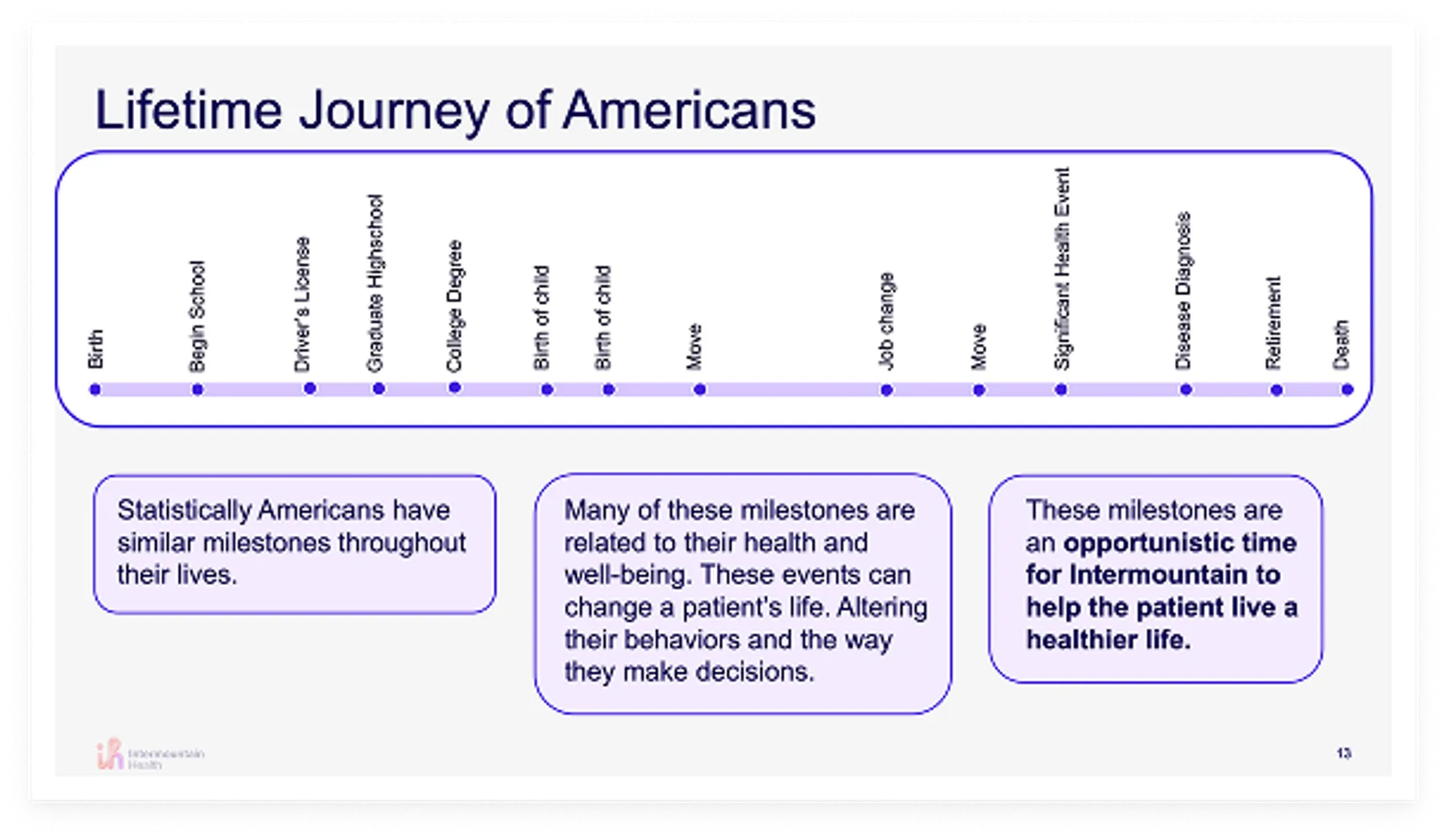
Life milestones like starting school, changing jobs, having children, moving, or experiencing a major health event all influence how people think about and engage with their health.
By combining these predictable moments with insights from interviews, demographic data, and behavioral patterns, we can see where people's needs, emotions, and decision-making change. This exploration phase helps us recognize when individuals are most open to support, what barriers they face, and where meaningful opportunities exist for Intermountain to guide, educate, or assist them at the right time.
Ideate

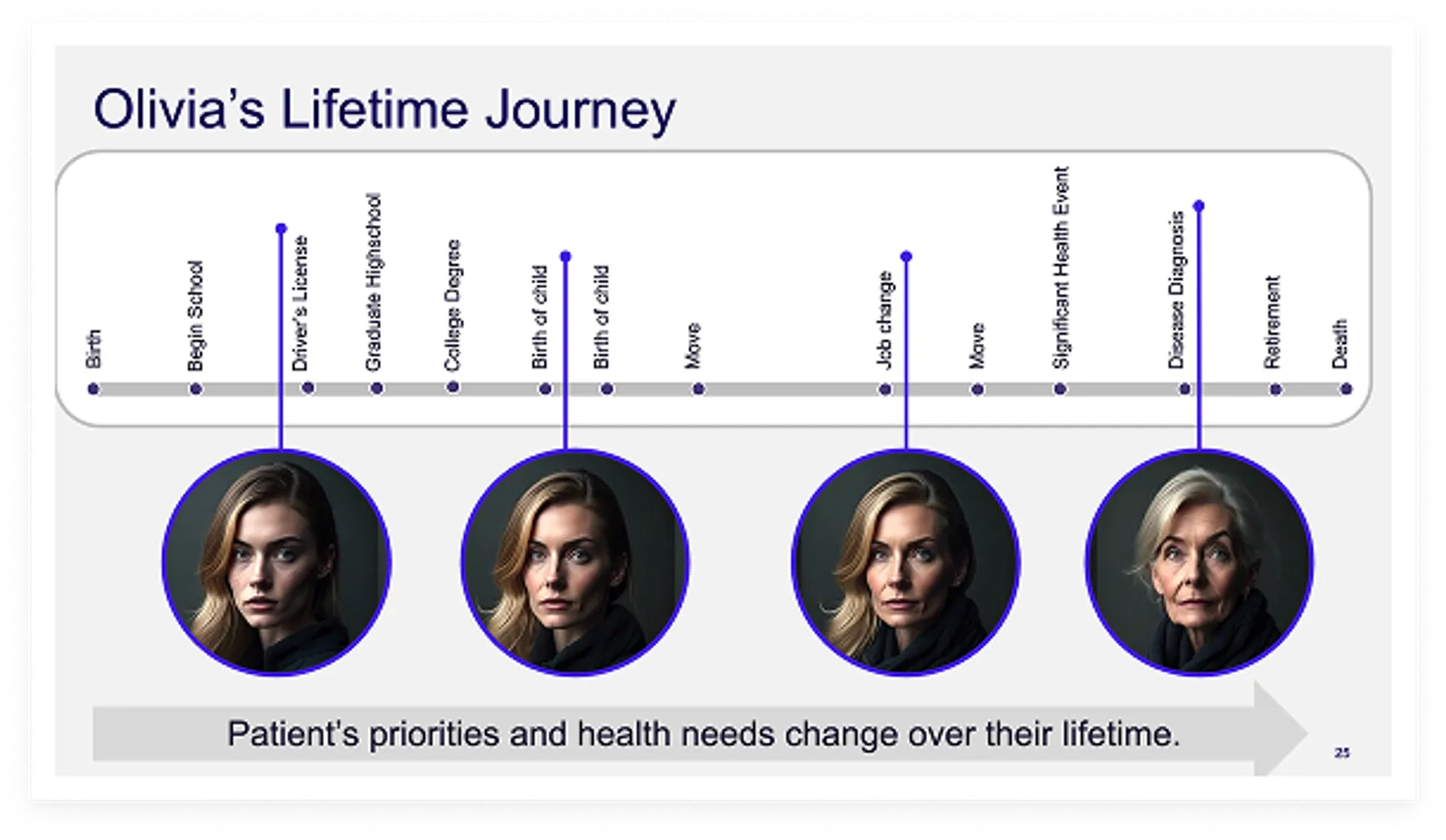
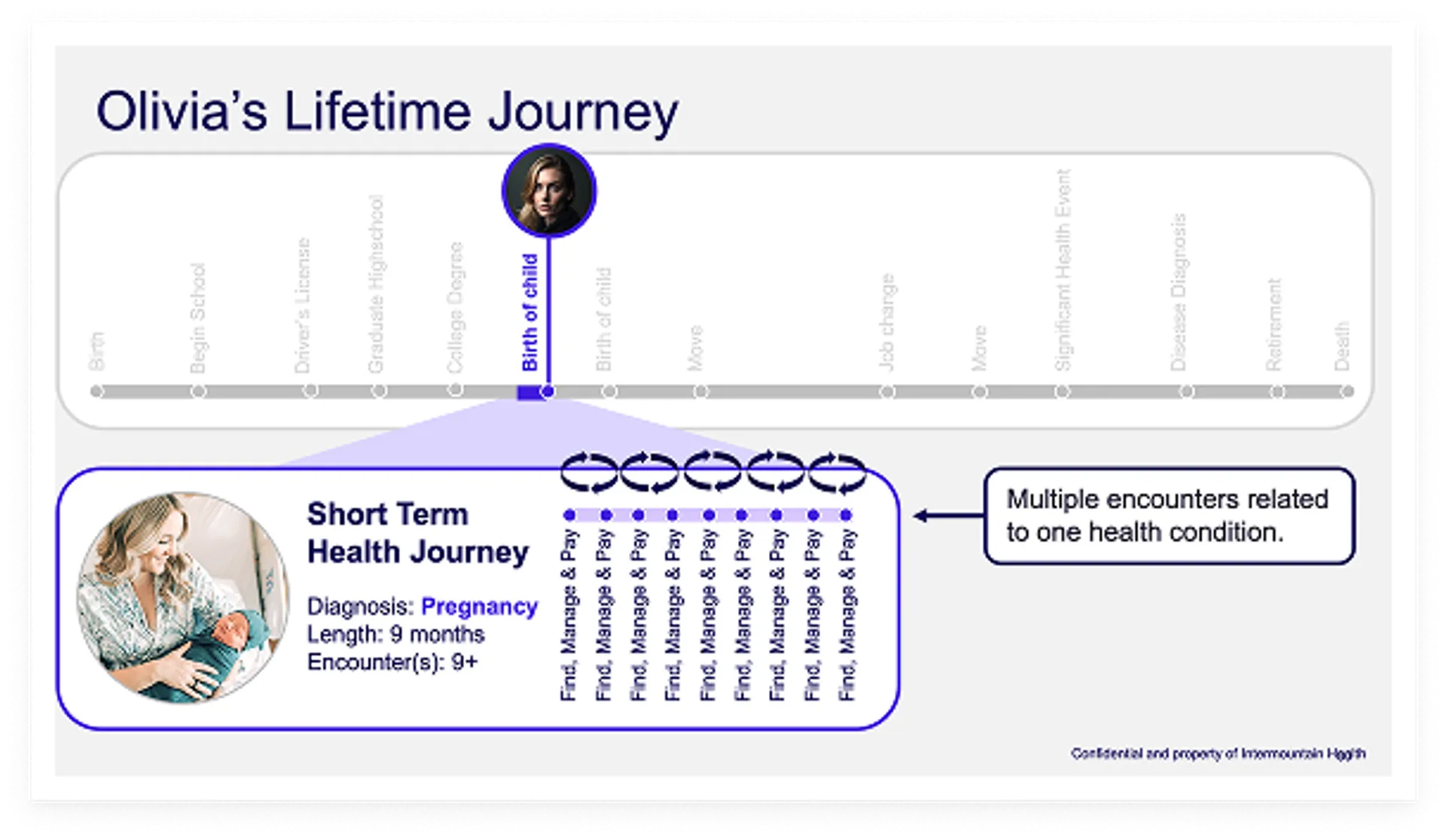
In the Ideate phase, we took the patterns and insights from the previous stage and focused on our primary persona, Olivia. We mapped out what her life typically looks like, using a common path for many women as a foundation. From there, we highlighted one of the most significant moments in her journey: childbirth.
This moment doesn't just change Olivia's life—it introduces a brand-new patient into the system. By zooming in on this milestone, we began exploring what Olivia needs before, during, and after this event, and what opportunities Intermountain has to support both her and her growing family in meaningful, practical ways.
Prototype

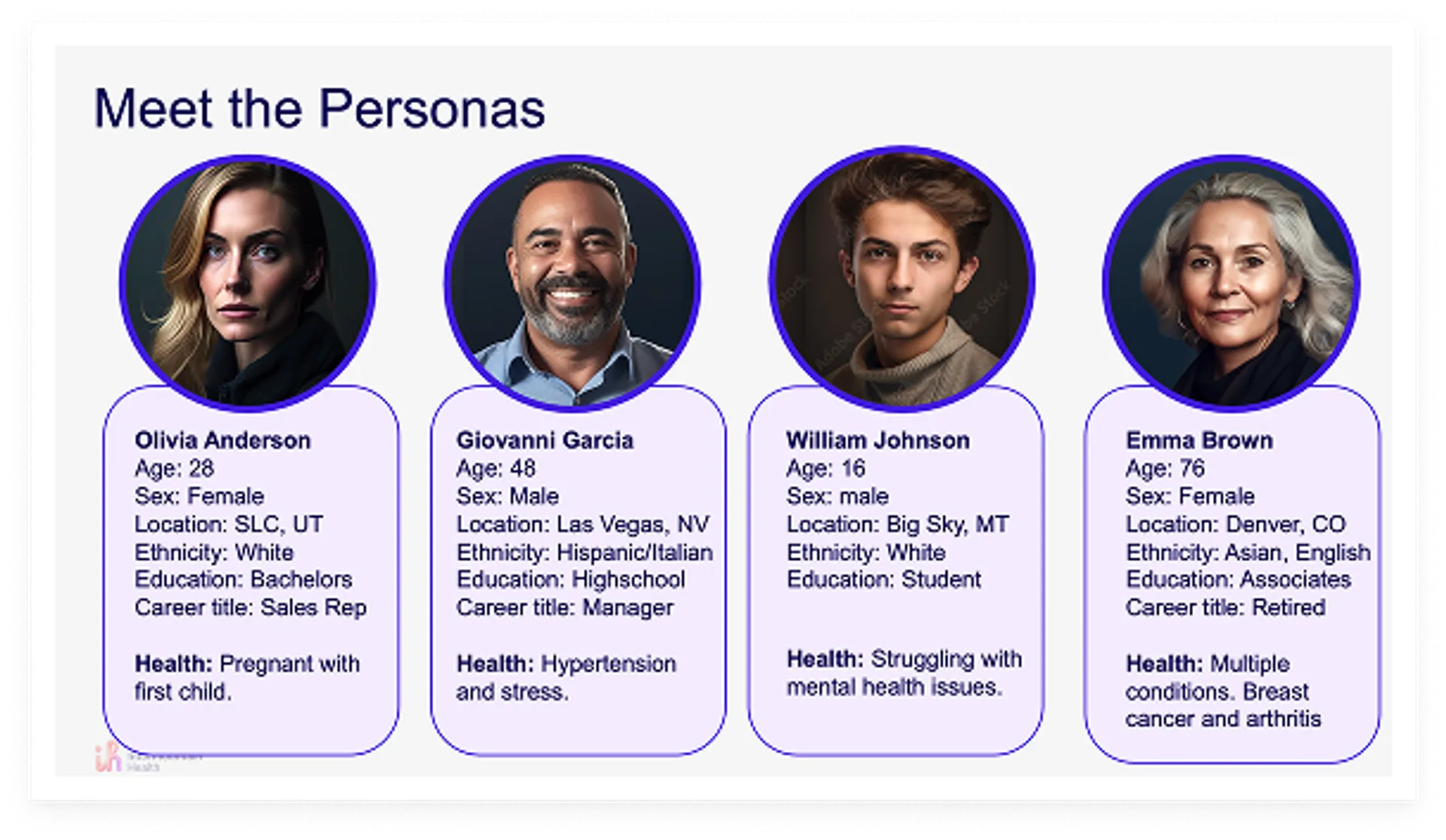
In the prototyping phase, each persona's needs and life circumstances were turned into full, realistic experience flows. These prototypes showed how different people move through the system, what they try to accomplish, and where support is needed.
By building complete representations of each persona's journey, it became easier to see patterns across ages, conditions, and life stages, while still honoring what makes each person unique. This phase turned insights into concrete experiences that clearly illustrated real patients.
- Design for clarity, continuity, and emotional support across major life changes.
- Identify where users need simplified workflows, coordinated information, and trust-building design.
- Validate that digital experiences serve both quick tasks and long-term care journeys.

- Support privacy, accessibility, and psychological safety in every design.
- Consider vulnerable users who benefit from low-effort digital paths.
- Create systems that adapt to long-term therapy, changing motivation, and ongoing recovery.

- Insight into learning challenges, mental-health needs, complex care coordination, and age-related accessibility.
- A lens for creating experiences that must stay clear, supportive, and flexible from youth to older adulthood.

- Insight into injury recovery, trauma response, chronic conditions, and work-life pressure.
- A lens for building experiences that must be fast, simple, and sustainable for busy families and aging adults.

Test

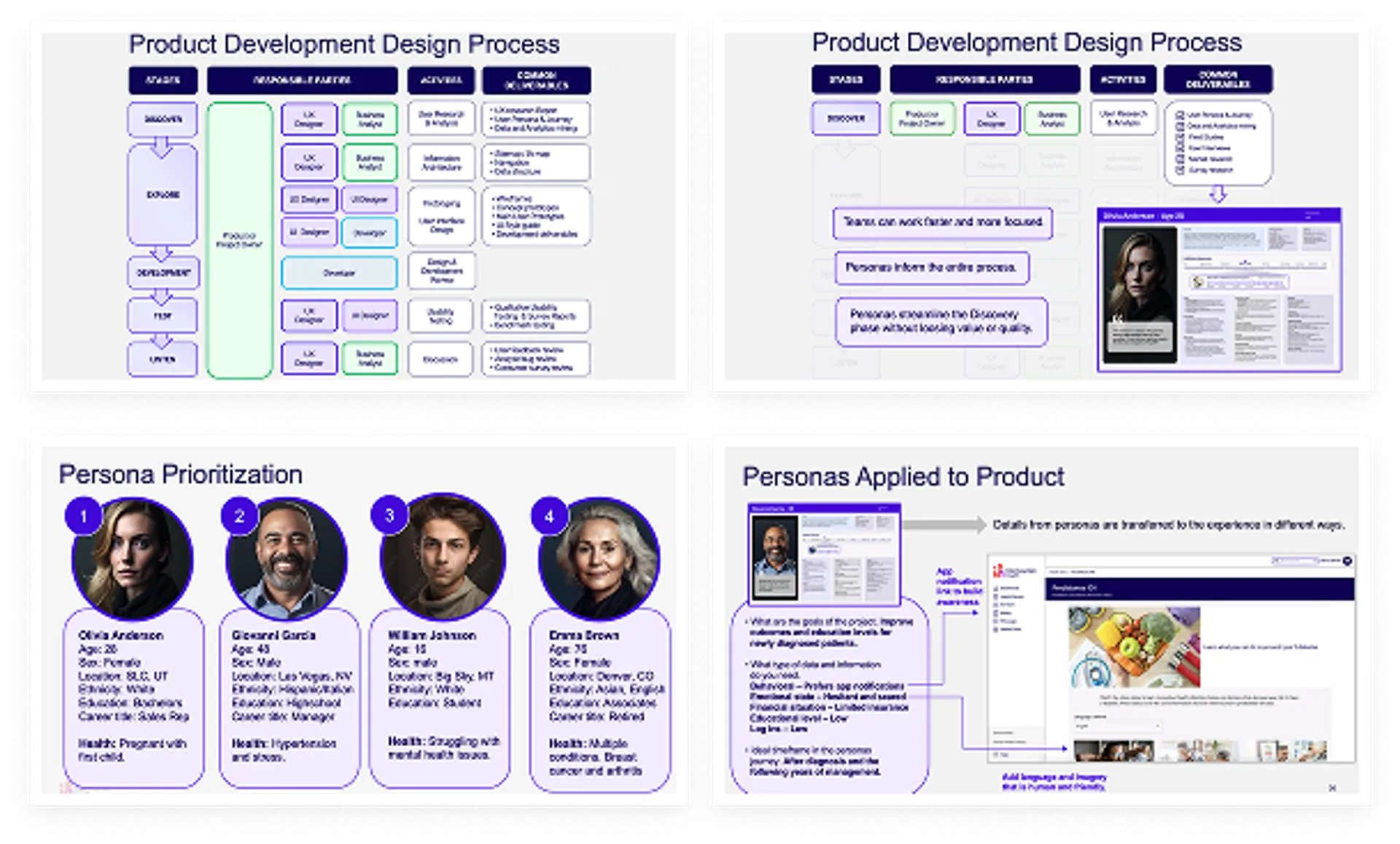
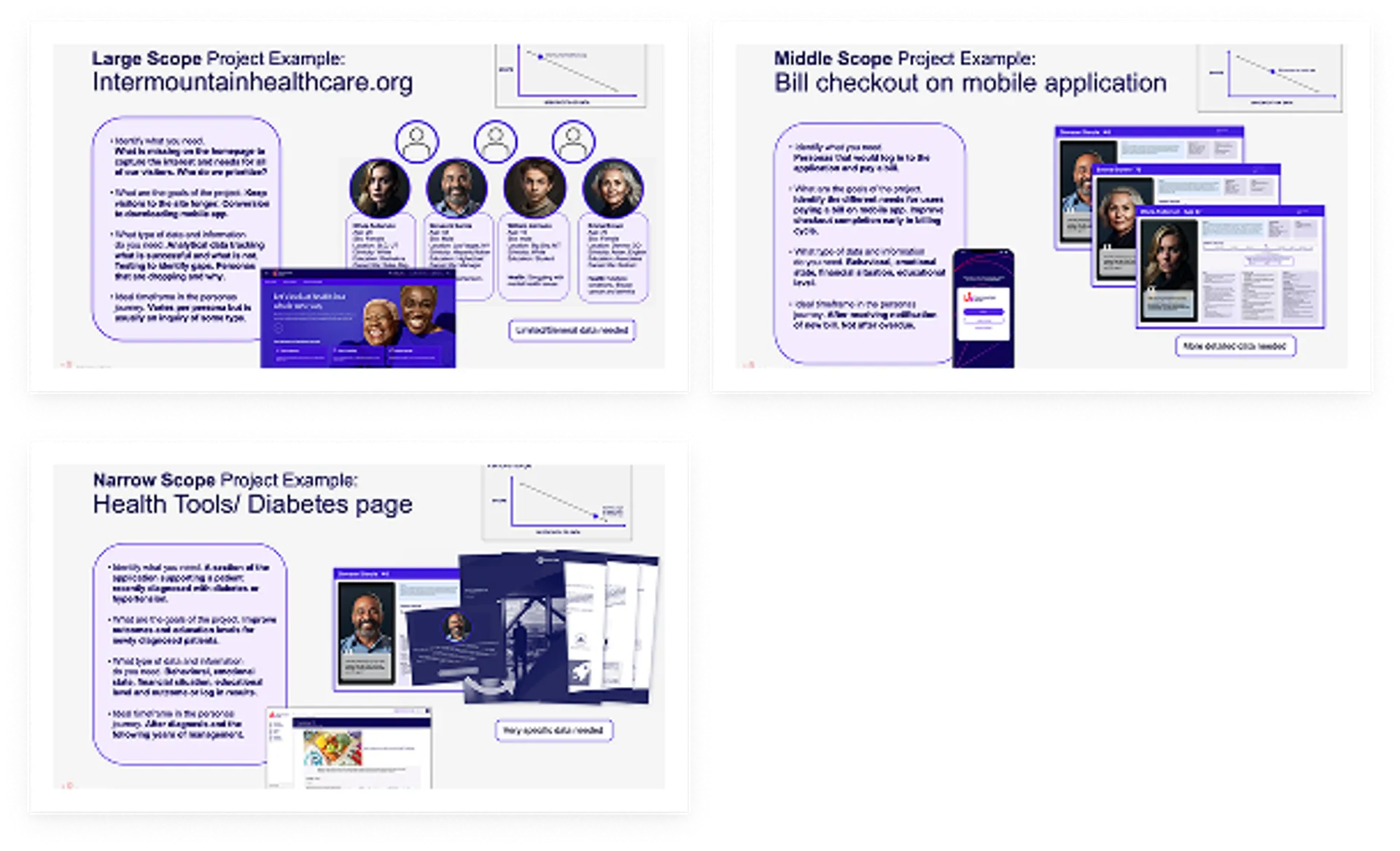
Testing in this phase means applying the personas to different products and project sizes to see how well they highlight user needs and potential issues. Using them in large, middle, and narrow-scope work shows whether each persona brings forward the right insights and helps teams anticipate real-world challenges. This process also became part of training for designers and product owners, helping them learn how to think through user needs and apply personas effectively in their own work.
Implement

The implementation phase focused on helping the team confidently use the personas in real project work. This included a two-session training series that walked through how the personas were created, the research behind them, and the specific ways they can be applied throughout the product development process. The sessions showed designers and product owners where personas fit into discovery, planning, and decision-making, and how they can strengthen problem-framing, prioritization, and solution design. By the end of this phase, the team had a shared understanding of how to integrate personas into everyday workflows, making them a practical tool rather than a reference document.